Stars seem to be aligned for Salem CC to start football, but decision after consultant’s report rests with board
By Al Muskewitz
Riverview Sports News
CARNEYS POINT – The secret to taking a concept and turning into reality, whether it’s on the football field or in the board room, is striking when the iron is hot.
Why else do you think football teams almost immediately go up top after coming up with a momentum-swinging turnover?
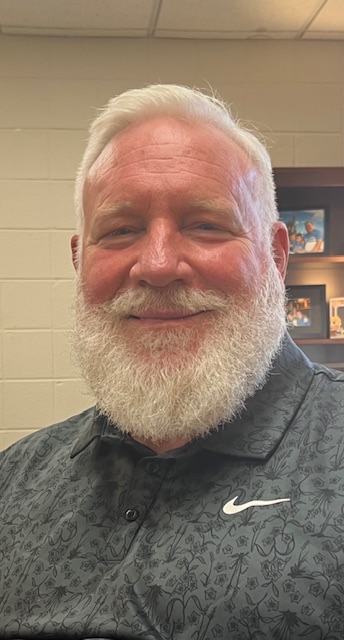
As Salem Community College explores the feasibility of bringing a football to its lineup of sports offerings, the landscape seems inexorably right. Maybe even the perfect storm.
Even college president Mike Gorman acknowledged when bringing the concept to the board for consideration at its most recent meeting “if we’re going to do it, this is our window of opportunity.”
The same elements – and questions – exist that were around when the school looked into it before. This time, there might be a more receptive ear on the inside.
Two weeks ago the board took a big step towards making it happen, giving the go-ahead to bring on Jay Accorsi as a consultant on a two-month contract to do a deep dive on the feasibility of football on Hollywood Avenue.
It is not Accorsi’s place to tell the board what decision to make, just provide them with as much detail as possible to make an informed decision on whether football fits. The internal vibe seems positive, but it was the last time Salem looked at the issue, too.
“Having the need for it is one thing, being able to do it is a whole different situation,” Accorsi said. “The need for it is certainly there, it’s just piecing everything together. There are a lot of things that will take care of itself, there’s a lot of other little things that need to be worked out to make sure it fits.”
Accorsi has long been intrigued by the absence of junior college football in New Jersey, given the quality of the high school game in the state. He just needed an opportunity to tell someone. That window opened last April when he retired after 30 years at Rowan, the last 22 as its head football coach.
He became even more convinced it could work after looking at what Sussex County CC was doing in the sport while his own Profs program was shut down by the COVID pandemic.
If it could work there, he wondered, why weren’t more New Jersey JUCOs following suit. If it could work at Sussex, he thought, surely it could work elsewhere under the right conditions.
The conditions seem right for Salem. The Mighty Oaks would basically be the only game in the region and have a deep pool of potential players to recruit from.
Sussex is still the only NJCAA member school in New Jersey playing the sport. When Lackawanna transitions to NCAA Division II, Pennsylvania will have none. Delaware has none. There are trade schools in Pennsylvania and Delaware that sponsor the sport and could become a potential opponent, but those are specialized institutions outside the NJCAA umbrella. That means there is only one JUCO program in the East between Central New York and Louisburg, N.C.
As it was, Sussex, which offers scholarships and dorms, drew players from Philadelphia, Baltimore and Washington in addition to more homegrown talent.
“There’s a huge void there,” Accorsi said. “I had always thought in my mind and heart that there should be junior college football in New Jersey. I moved here in the early 90s. I was shocked that there wasn’t because of how great New Jersey high school football was and … there were a lot more junior college football programs back then than there are now.
“Then you would see all these Jersey kids have to leave the state to go to all these other places to play. It always kind of was in the back of my mind. I saw there were pay-for-play (prep) schools and I saw they were charging like $22,000 a year and they (players) got no academic benefit by going to those schools.
“When I looked at the rosters, they had 40, 50, 60 players and most of them were New Jersey kids. And when I looked at most of the rosters of the junior colleges, most of them were New Jersey kids. I said it’s crazy.”
Accorsi continued to investigate the JUCO game, privately keeping a file on his research that was the basis of the pitch he would take to Salem. He enhanced it with what he already knew of what it was taking to play the game at Rowan.
He considered making the pitch to other junior colleges in South Jersey, but he was familiar with Gorman and his athletics background and one day emailed to see if Salem might be interested in what he had to say. They had about a half-hour face-to-face meeting where Accorsi presented some “extensive” and “very detailed” research and it got the ball rolling.
Accorsi didn’t make his research available for media and didn’t address Salem’s situation specifically, but much of the information related to finances, expenses, coaching salaries and player participation are available in the comparative school’s Equity in Athletics report that is available to the public. Gorman estimated Salem’s start-up outlay would be about $500,000.
Salem looked into bringing football to campus when it was reviving the athletics program in the twenty-teens, and although the sense then was it could work, the school decided not to launch at that time.
“I thought this might be a fit because of what Sussex did being a small college I think it really fit a need for a lot of things they wanted to do,” Accorsi said. “I think if you go to a bigger college it may not have the same effect, and I wasn’t interested in that. I was interested in making it something that was going to be hopefully really important.
“I told (Gorman) I’m just interested in serving New Jersey. I think it’s a shame all these New Jersey high school students leave the state to go to all these other places to play and pay a lot of money and in some instances don’t get any academic benefit. They’re just going to play, to get film, and spend a lot of money. That’s just, to me, bad.”
If the Mighty Oaks are going to pull the trigger in time to start in 2026, Gorman told the board a decision should be made by mid-October. The clock is ticking.
“There is a lot you need to do, a lot of groundwork, and a lot of things to take an idea from concept to reality,” Accorsi said. “You want to make sure it fits and is the best thing for the student athletes, the best thing for the student, the best thing for the institution, which I think make it very unique.
“I happen to be at the right place at the right time with the right institution and the right president and athletic director and people. So, things have kind of fit a little bit early, but there’s a lot of things you’ve got to cover and go through that we will in the next few months to make sure that whatever decision it is it’s the right one whether it is to proceed or not to proceed. I think that’s important.”
 Riverview Sports News